 ultimate-guide
Contract Food Packaging Cost Factors: 2026 Guide
Last Updated: October 24, 2026
Quick Summary
The contract food packaging cost factors that actually move your quote are line time, changeovers, run size, and labor per shift, not just the price of film. Setup, allergen sequencing, storage, and freight are billed alongside the line rate, so total landed cost is what you compare.
- Four pricing models dominate co-packing: per-unit, hourly, flat-fee, and cost-plus, each shifting risk differently.
- Setup and sanitation are fixed per run, so they shrink per unit as run length grows.
- Allergen sequencing is the most under-quoted food cost driver because each transition triggers a validated cleaning procedure.
- Ask every provider to quote setup, storage, and changeover separately rather than bundled into one rate.
- Send product type, allergen profile, fill tolerance, artwork, and volumes with every quote request.
Table of Contents
- How Contract Food Packaging Cost Factors Shape Your Quote
- The Pricing Models Behind Every Co-Packing Quote
- Inside the Food-Specific Cost Drivers: Materials, Labor, and Line Time
- Contract Packaging Hidden Costs That Catch Buyers Off Guard
- How Co-Packing Minimum Order Quantity and Run Size Move Your Unit Cost
- Your Food Packaging Quote Checklist: What to Send and What to Compare
- Food Packaging Cost Reduction Strategies That Protect Quality
- Conclusion
- Frequently Asked Questions
How Contract Food Packaging Cost Factors Shape Your Quote
Most buyers assume a co-packer quote lives or dies on the price of film. It doesn't.
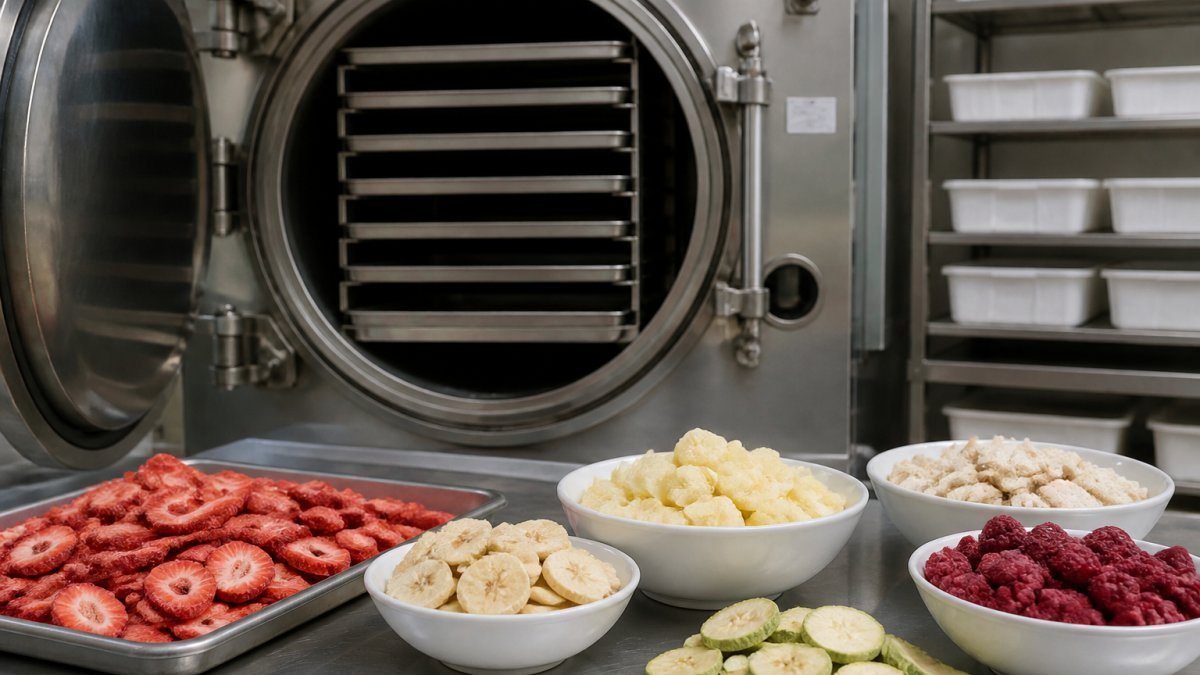
Contract food packaging outsources filling, sealing, labeling, and case-packing to a third-party facility, trading capital equipment spending for a variable per-unit or hourly charge.
The FDA's Food Traceability Rule overview matters here because traceability, allergen controls, and lot documentation are labor and systems costs that show up in your quote whether or not the provider itemizes them.
The Pricing Models Behind Every Co-Packing Quote
Four pricing models dominate co-packing agreements: per-unit, hourly, flat-fee, and cost-plus. Each shifts risk differently between you and the packager, and the model matters more than the rate.
Per-Unit, Hourly, Flat-Fee, and Cost-Plus Explained
Per-unit pricing charges a fixed amount per finished unit.
Hourly rates bill for line time, rewarding efficiency and punishing indecision, since changeovers and stoppages bill at the same rate as production.
Flat fees cover a defined scope, typically a single run or project.
Cost-plus pricing passes through materials and labor at cost with an agreed markup.
A common mistake is choosing a model before understanding your own order pattern.
| Pricing Model | Best For | Risk Sits With | Transparency |
|---|---|---|---|
| Per-unit | Stable, high-volume SKUs | Packager | Low |
| Hourly | Seasonal, multi-SKU runs | Buyer | Medium |
| Flat fee | Defined single-run projects | Packager | Medium |
| Cost-plus | Complex or changing specs | Shared | High |
Inside the Food-Specific Cost Drivers: Materials, Labor, and Line Time
Food packaging carries cost drivers general contract packagers never face. Allergen sequencing, sanitation windows, and moisture-sensitive ingredients all consume line time a non-food operation doesn't budget for.
Packaging Materials and Component Costs
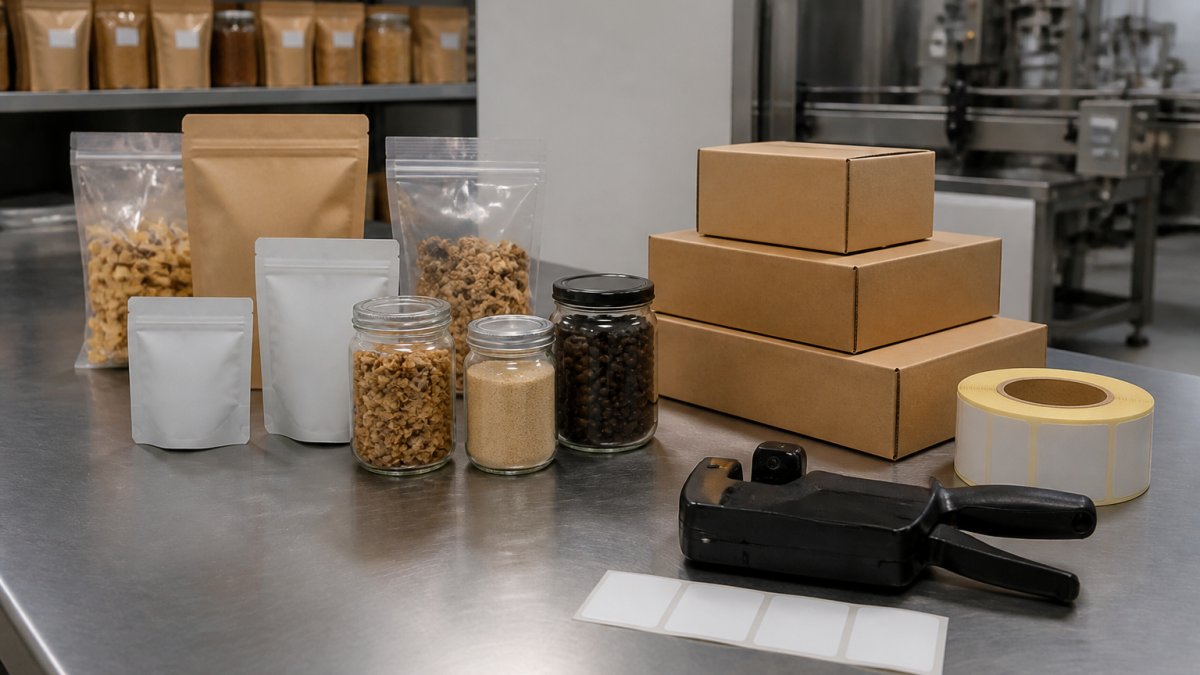
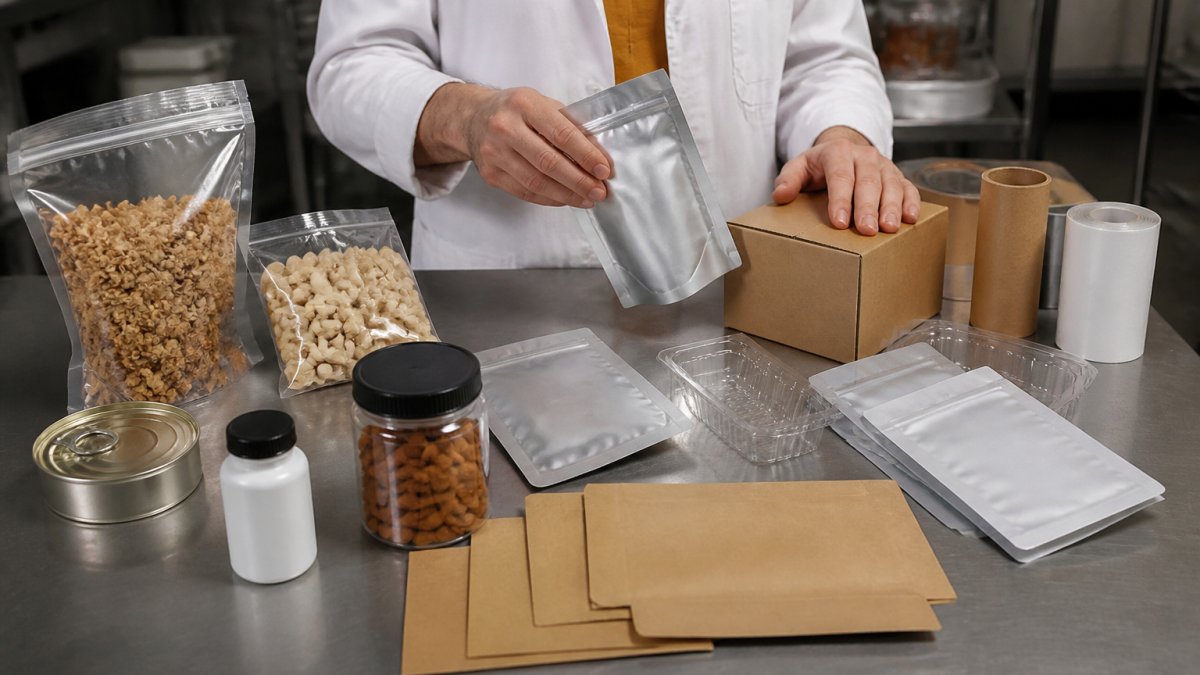
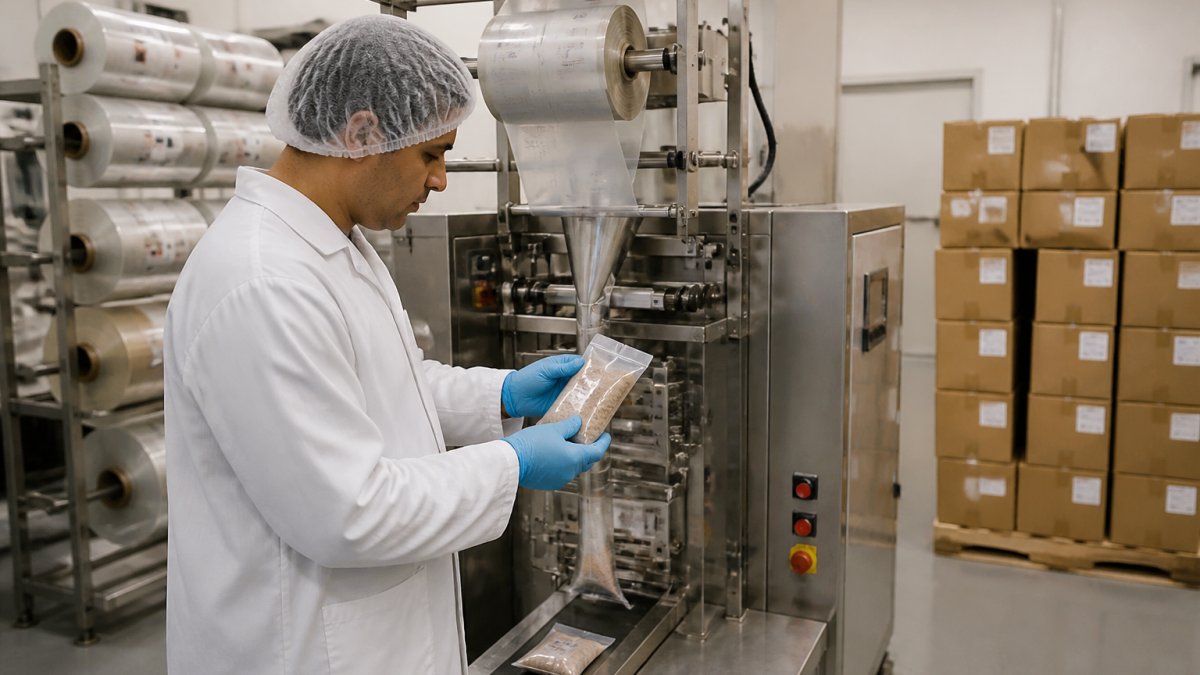
Film, pouches, cartons, labels, and closures are usually the largest single line item. A high-barrier laminate for a moisture-sensitive powder costs more than standard clear film, and that difference compounds across volume.
Material cost is tied to your specification choices, not just market pricing. You can see the full range of in-house capabilities, from blending and freeze-drying to packaging procurement and warehousing, on the capabilities page.
Two material traps are worth flagging. Film gauge and seal integrity are linked: downgauging can push seal strength below what your distribution channel tolerates, and leak failures cost far more than the film savings. Printed film and labels also carry plate, setup, and minimum-order costs, so short custom-printed runs carry a disproportionate share of the material line.
Labor, Staffing, and Quality Control
Labor is the cost factor buyers underestimate most. It covers operators, sanitation crews, quality technicians, and documentation time behind every lot, plus food-safety checks a general packager doesn't perform: allergen changeover verification, metal detection records, and lot traceability entries.
It's worth asking any provider to walk you through their systems before signing.
Allergen Sequencing and Sanitation Windows
The single most under-quoted food cost driver is allergen sequencing. Facilities schedule products to minimize allergen-to-non-allergen transitions, because each triggers a validated cleaning procedure before the next run.
That's why the same product can quote differently at two facilities with identical rates: one schedules it after a compatible SKU, the other after an allergen-containing one. Ask how providers sequence your product and whether the quoted setup assumes a full allergen changeover or a simpler product-to-product transition.
Testing, Traceability, and Shelf-Life Verification
Food quotes also carry testing and verification costs general packaging never touches. Depending on the product and buyer requirements, a run may involve metal detection or X-ray checks, seal integrity testing, weight and fill verification, and lot coding tied to a traceability record.
The FDA's Food Traceability Rule overview matters here because traceability, allergen controls, and lot documentation are labor and systems costs that show up in your quote whether or not the provider itemizes them.
Contract Packaging Hidden Costs That Catch Buyers Off Guard
The line rate is rarely where budgets break. Contract packaging hidden costs cluster in setup, storage, freight, and changeover, and they explain why two quotes for the same product can differ substantially once the run is complete. Control them by understanding how each is triggered and insisting your quote separates them from the production rate.
Setup, Changeover, and Sanitation
Setup and changeover time is billed even though nothing ships. A packager running your product after an allergen-containing SKU may need a full sanitation cycle first, and that window is real cost. Setup also includes film threading, fill-weight calibration, code-dating configuration, and first-article checks. On short runs setup can be a meaningful share of total line time; on long runs it fades, the mechanical reason run length matters, and why a provider that quotes setup separately is easier to compare.
Storage, Warehousing, and Pallet Fees
Pallet storage and warehousing fees accumulate when finished goods sit waiting for a purchase order. Most facilities provide a free storage window after production, then charge per pallet position per period beyond it. The cost is easy to overlook because it arrives weeks after the run, but it compounds for seasonal builds, slow-moving SKUs, and product held pending retailer release.
Request a Manufacturing Quote →
Freight and Transportation
Freight and transportation costs depend on pallet configuration, distance, and whether you ship full truckloads or less-than-truckload. A pallet that cubes out efficiently and meets standard height and weight limits moves cheaper, and case-pack dimensions chosen at the specification stage determine that. Inbound freight for film, labels, and components is a separate line buyers often forget when comparing a local packager against a distant one.
Downtime, Rework, and Chargebacks
Downtime caused by artwork delays, missing components, or slow approvals is often billable. So is rework when specifications arrive incomplete. Retailer chargebacks for mislabeled or out-of-spec cases are the largest hidden cost of all, and they are usually triggered by errors that a complete specification package would have prevented.
A Worked Example With Labeled Assumptions
To see how these lines combine, walk through a hypothetical run: a dry powder product in stand-up pouches, a first run of modest size, standard film, delivered to a regional distribution center. The quote breaks into four blocks:
- Setup and sanitation: a fixed charge per run, driven by changeover complexity and allergen sequencing.
- Materials: film, labels, and cases, scaled by unit count and specification choices.
- Line time: labor and equipment time, scaled by run length and line speed.
The instructive part is the shape, not the dollar figure, which varies by product and provider. Setup and sanitation are fixed per run, so they shrink per unit as the run grows. Materials scale roughly linearly. Line time scales with run length but improves with line speed and fewer stoppages. Post-production costs depend on how quickly you move finished goods.
Comparing Quotes on the Same Lines
When quotes arrive, normalize them before comparing. Build a grid with a row for each cost block above and a column for each provider. Flag any quote that bundles setup, storage, or freight into a single rate, because you can't tell whether the bundle is generous or expensive. Then check the terms that decide total cost after the run: the free storage window, freight basis, whether unused materials are billed or returned, and whether the rate escalates with volume changes or commodity movement.
How Co-Packing Minimum Order Quantity and Run Size Move Your Unit Cost
Co-packing minimum order quantity is the smallest run a facility will accept, and it's the single biggest lever on unit cost. Setup, sanitation, and changeover costs are fixed per run, so spreading them across more units lowers the cost of each.
A short run carries the same setup burden as a long one, so its per-unit cost is higher by definition.
Smaller and seasonal brands don't have to choose between low volume and reasonable pricing. Flexible minimums and the ability to add secondary or overflow capacity without replacing an existing facility let a growing brand scale runs as demand builds rather than committing to volume it can't yet sell.
Your Food Packaging Quote Checklist: What to Send and What to Compare
A complete food packaging quote checklist saves weeks. Providers can only price what they can see, and incomplete specifications come back as wide-range estimates or later change orders.
Send these with every quote request:
- Product type, ingredient list, and allergen profile
- Target unit weight and fill tolerance
- Packaging format (pouch, bag, carton) and material preferences
When quotes come back, compare them on the same lines: setup, materials, labor, storage, freight, and changeover.
Once your specifications are assembled, you can request a manufacturing quote with product type, service, volumes, and packaging details for a confidential response.
Food Packaging Cost Reduction Strategies That Protect Quality
Food packaging cost reduction strategies work best when they target waste rather than quality. Savings that hold up over time come from specification discipline and production planning, not from squeezing the packager.
Standardize packaging across SKUs where the product allows it. Fewer film and carton sizes mean better material pricing and faster changeovers. Right-size packaging so you're not paying for headspace.
Efficiency gains compound as the operation develops, which is why the cheapest quote and the lowest total cost are rarely the same number. The approach to reducing waste in the system shows how right-sizing packaging and consolidating freight work in practice.
Conclusion
The hardest part of buying contract food packaging isn't finding a provider. It's comparing quotes built on different assumptions and knowing which cost factors you can actually influence.
Northridge Industries runs contract packaging, dry blending, freeze-drying, and warehousing under one roof, with flexible minimum order quantities, automated VFFS and HFFS equipment, and volume-based pricing built for recurring production.
Frequently Asked Questions
What factors affect contract food packaging costs?
The biggest packaging cost factors are packaging materials and components, labor and staffing, production line time, setup and changeover, run size, and storage or freight. Food-specific requirements add more: allergen handling, label accuracy checks, lot traceability, and quality control all consume line time and labor. Product format matters too, since a free-flowing powder fills faster than sticky candy. Ask each provider to break the quote into these categories so you can see which factors drive your number and where volume changes would help.
How do contract packagers calculate packaging costs?
Most co-packers build a quote from four inputs: material cost per unit, labor and machine time per run, setup and changeover time, and overhead recovery. They then apply a pricing model, usually per-unit, hourly, flat-fee, or cost-plus. Run size and line utilization determine how much of the setup cost each unit absorbs. A provider running your format regularly will quote tighter than one scheduling a rare changeover. Ask which model applies and which assumptions (units per minute, scrap rate, changeover hours) sit behind the number.
What information should I provide to get a food packaging quote?
Send a food packaging quote checklist covering: product description and format, target unit size and pack count, packaging specifications (film or pouch structure, label artwork status), annual and per-run volumes, required certifications or allergen controls, delivery destinations, and your target launch date. Include any existing packaging components you plan to supply and whether formulas are proprietary. Complete inputs let a co-packer quote accurately instead of padding for unknowns. Northridge Industries offers fast, no-obligation quoting once these details are in hand.
How do order volume and co-packing minimum order quantity affect costs?
Setup, changeover, and quality checks cost roughly the same whether you run 5,000 units or 50,000, so a low co-packing minimum order quantity spreads those fixed costs over fewer units and raises your per-unit price. Larger runs and repeat schedules improve line utilization and lower unit cost. That is why flexible-MOQ providers matter for emerging brands: you can start small without paying a punishing per-unit premium, then scale into volume pricing as orders grow. Ask how unit cost changes across three volume tiers.
What hidden costs should I look for in a contract packaging quote?
Watch for setup and changeover fees quoted separately, pallet storage and warehousing charges, inbound and outbound freight, label rework or downtime caused by artwork errors, expedite fees, and minimum monthly commitments. Component scrap allowances and film overage can also add up. The safest approach is to request an itemized quote and compare total landed cost, not just the headline per-unit rate. A low unit price with heavy storage and freight add-ons often costs more than a transparent, slightly higher quote.
How can a food brand reduce contract packaging costs without sacrificing quality?
Standardize packaging components across SKUs, consolidate run sizes to improve line utilization, forecast demand so schedules stay stable, and keep artwork approved well before production. Supplying your own components can cut material markup but shifts scrap and lead-time risk to you. Food packaging cost reduction strategies work best when they target setup and changeover efficiency rather than cutting quality control, since label errors and rework cost far more than the checks that prevent them. Discuss volume tiers with your co-packer before committing.