 blog
Freeze Drying Services for Food Brands: 2026 Guide
Table of Contents
- Why Food Brands Outsource Freeze Drying
- How the Freeze-Drying Process for Food Works
- What Commercial Freeze Drying Services Cover
- Foods That Freeze-Dry Well (and Those That Don't)
- Freeze-Dried Food Contract Manufacturing: What to Verify
- Freeze-Dried Food Packaging That Protects Shelf Life
- What Drives the Cost of Freeze Drying Services
- Choosing a Freeze-Drying Partner: A Practical Checklist
- Frequently Asked Questions
Last Updated: October 21, 2026
Why Food Brands Outsource Freeze Drying
Freeze drying services exist because the equipment is expensive, cycle times are long, and the learning curve is steep. A commercial freeze dryer is a capital purchase most emerging brands cannot justify, and running one badly ruins product fast.
The pattern repeats: a brand validates a freeze-dried SKU, sells through its first run, then discovers that buying equipment means months of lead time, facility upgrades, and a utility bill that never stops.
The trade-off is control: you hand your formula and batch schedule to someone else, so vetting matters more than the price sheet. Below, we cover how the process works, what to verify, and where costs come from.
How the Freeze-Drying Process for Food Works
The freeze-drying process for food removes water from a frozen product by turning ice directly into vapor, skipping the liquid stage. That explains why freeze-dried strawberries stay crisp and red while air-dried ones turn leathery and brown.
From Freezing to Sublimation
Three stages define every cycle. First, the product freezes solid, and the freezing rate shapes cell structure. Second, under vacuum, ice sublimates into vapor without passing through liquid. Third, secondary drying removes the bound moisture left behind.
Skip or rush the third stage and you get a product that looks dry but softens in the bag within weeks.
How Long Commercial Freeze-Drying Takes
Cycle length depends on the food, piece size, and load depth. Thin slices and small fruit pieces move faster than dense, whole items or high-moisture purees. Run pilot batches to measure actual cycle time for your product rather than assuming a standard schedule.
What Commercial Freeze Drying Services Cover
Commercial freeze drying services span more than the drying chamber. A capable partner handles recipe development, pilot production, commercial runs, quality checks, and often the packaging that follows.
That last piece catches many brands.
We handle freeze drying alongside dry ingredient blending, VFFS and HFFS pouch filling, and bulk-to-retail repacking under one roof. Fewer handoffs mean fewer places for a batch to sit and absorb moisture.
Foods That Freeze-Dry Well (and Those That Don't)
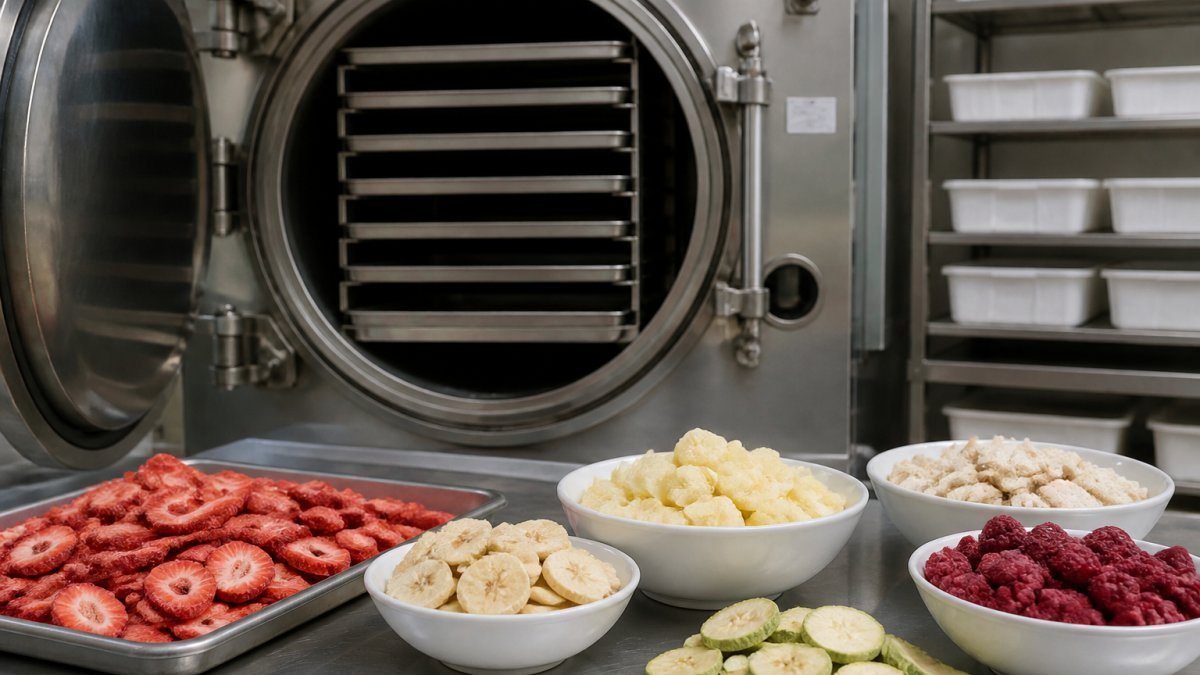
Fruits, vegetables, meats, and snacks dominate freeze-dried food applications because they hold structure after freezing.
High-fat and high-sugar items need more care. Fat can oxidize during storage, and sugar-heavy products turn hygroscopic, pulling moisture from the air the moment packaging fails.
Purees and liquids work but require tray loading and longer cycles, which changes the economics. Powders and ingredients are a strong fit because the finished product integrates cleanly into blending and pouch filling.
- Excellent fit: berries, tropical fruit, vegetables, cooked meats, instant coffee, soup components
- Workable with care: cheese, nut butters, high-sugar confections
- Poor fit: items that rely on fresh crunch from water content, delicate garnishes
Freeze-Dried Food Contract Manufacturing: What to Verify
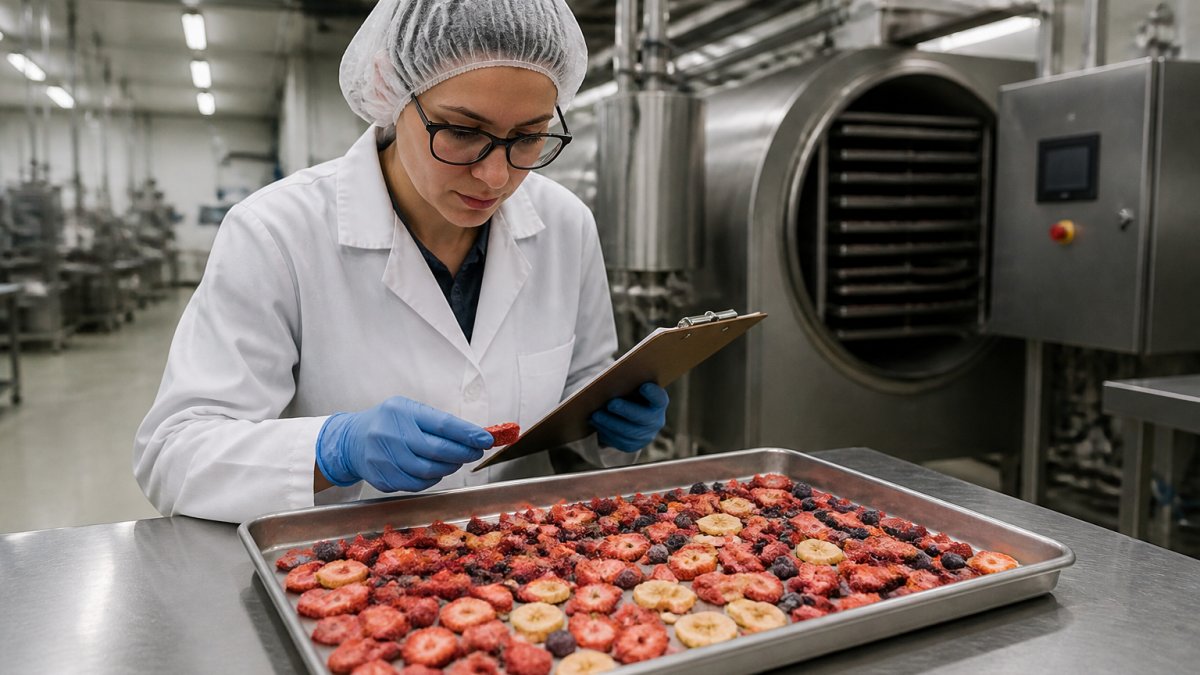
Freeze-dried food contract manufacturing is a trust exercise, and the verification list is longer than most buyers expect. Capability claims are easy to make; documentation is harder to fake.
Food Safety, Traceability, and Formula Confidentiality
Start with current good manufacturing practice. The FDA's Current Good Manufacturing Practice guidance for human food sets the baseline expectations for sanitation, allergen control, and record keeping at any facility handling food. Ask for the provider's written food safety plan and confirm it is specific to freeze-dried production, not a generic template.
Then probe the areas that matter most for this category:
- Allergen control. Freeze dryers handle diverse inputs, and cross-contact risk is real. Ask how the facility sequences allergen-containing runs, how it cleans between products, and whether it segregates dedicated equipment or shared lines.
- Environmental monitoring. Freeze-dried product is hygroscopic, so post-dryer humidity exposure is a quality risk. Ask how the facility controls and monitors humidity in the packaging area.
- Traceability. You want lot-level records connecting incoming ingredients to finished batches, in a format your ERP can accept. A provider that hands you paper logs is telling you something. Ask for a mock recall walkthrough, how fast can it trace a finished lot back to its ingredient lots?
- Formula confidentiality. Ask directly how recipes are stored, who can access them, and whether the provider will sign a nondisclosure agreement that survives the end of the relationship. Confirm in writing who owns the formula, the process specifications, and any product development work performed on your behalf.
Pilot Runs, MOQs, and Scaling to Commercial Volume
Run a pilot before committing. A pilot batch confirms cycle time, yield, and whether your product survives drying with the texture you promised customers.
Define those criteria before the pilot starts: target finished moisture or water activity, rehydration behavior, color, texture, and sensory attributes.
Minimum order quantities vary widely by provider and product.
Scale-up deserves its own conversation. Confirm the provider can move from pilot to commercial volumes without a process change that alters product characteristics.
Request a Manufacturing Quote →
Questions to Ask on the Facility Tour or Call
- Can I see the food safety plan and the allergen control procedures?
- How is humidity controlled in the post-dryer and packaging areas?
- Walk me through a mock recall from finished lot to ingredient lot.
- Who owns the formula and process specifications, and will you sign an NDA?
- What are the pilot pass/fail criteria, and who signs off?
Northridge Industries runs commercial freeze drying alongside dry ingredient blending, automated VFFS and HFFS pouch filling, and bulk-to-retail repacking, which means your product moves from dryer to sealed pouch without a second vendor in between. We work with flexible minimum order quantities and quote each project against your actual specifications. Request a manufacturing quote to start the conversation.
Freeze-Dried Food Packaging That Protects Shelf Life
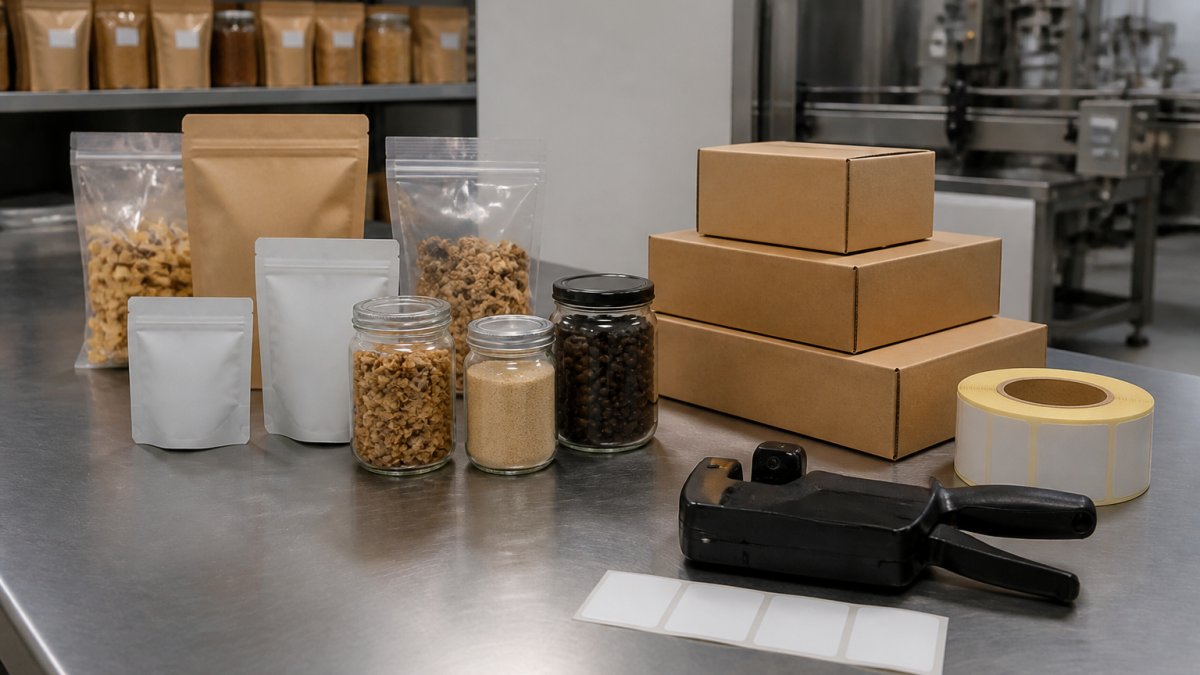
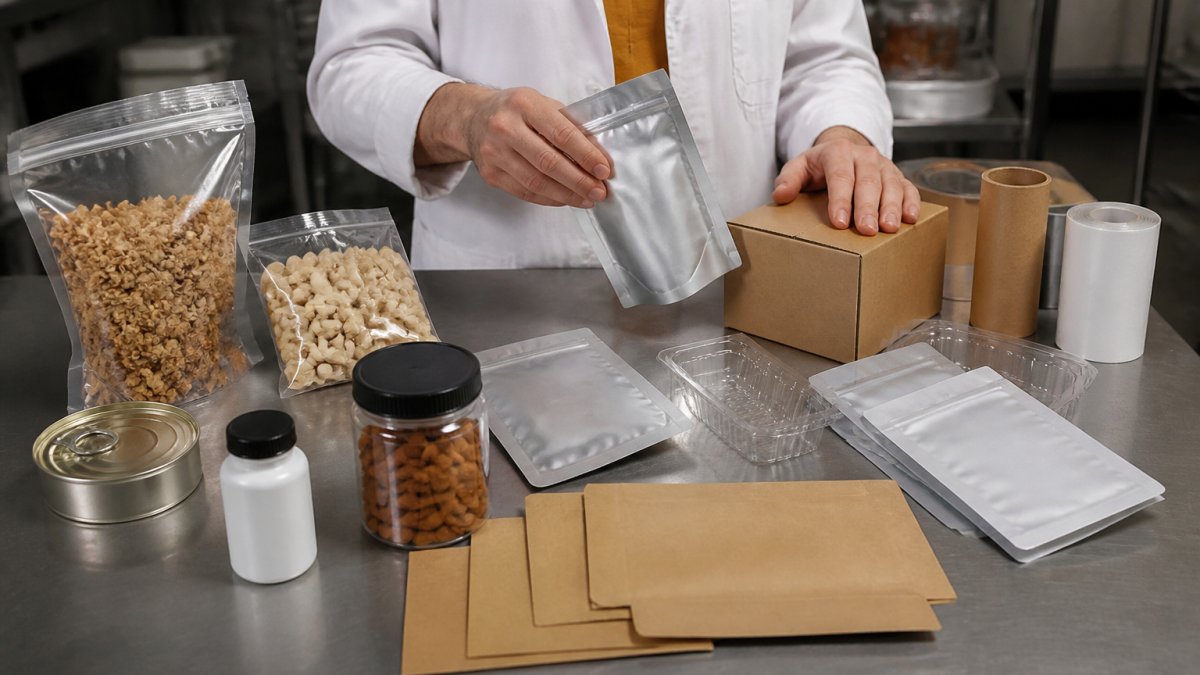
Freeze-dried food packaging is not a commodity decision. The product is hygroscopic by design, so the package must block moisture vapor and oxygen or the drying work is wasted.
High-barrier films with a metallized or foil layer are standard for retail pouches. Nitrogen flushing displaces oxygen before sealing.
Format choice follows the channel. Stand-up pouches suit shelf and e-commerce. Smaller single-serve formats suit sampling and lunch kits. Bulk bags serve foodservice and ingredient buyers.
| Package format | Best for | Barrier priority |
|---|---|---|
| Stand-up pouch | Retail shelf, e-commerce | High, foil or metallized layer |
| Single-serve stick pack | Sampling, kits, foodservice | Very high, minimal headspace |
| Bulk poly-lined bag | Ingredient and foodservice buyers | Moderate, secondary overcarton |
| Gusseted bag with reseal | Repeat-use consumer products | High, with zipper closure |
What Drives the Cost of Freeze Drying Services
Most pages on this topic either publish a vague rate range or skip cost entirely. Neither helps a procurement team build a budget.
Freeze-drying cost is driven by dryer time above all else. A commercial freeze dryer is an expensive asset with fixed chamber volume, and every hour it runs carries the same overhead whether the load is full or half empty.
The Four Cost Levers
Moisture content and load density. Water is what you pay to remove. A product at 85% moisture requires far more sublimation energy and cycle time than the same product at 60%.
Piece size and surface area. Surface area governs drying speed. Diced product dries faster than whole. Sliced fruit dries faster than chunks.
Cycle time and scheduling. Long cycles tie up the dryer.
Packaging complexity. High-barrier foil laminates, nitrogen flush, and multi-format runs all add cost.
What Buyers Commonly Overlook
- Yield loss. Some product is lost to trim, fines, and quality rejects. A realistic cost model accounts for yield, not just input weight.
- Rehydration and sensory targets. Cutting secondary drying to speed the cycle can produce a product that passes a moisture check but fails in the bag weeks later. Rework costs dwarf the cycle savings.
- Freight and storage. Freeze-dried product is light but bulky, and it is hygroscopic. Storage in a humidity-controlled environment and freight in sealed packaging are real line items.
- MOQ structure. A low MOQ is valuable, but the per-unit cost at that volume is higher than at scale. Model both so you know what growth does to margin.
How to Get a Useful Quote
Pricing depends on product specifications, volume, schedule, and packaging, so a responsible provider quotes each project rather than publishing a rate card. To get comparable quotes, send each provider the same package: product description, target finished moisture or water activity, piece size, expected annual and per-run volume, packaging format, and required delivery window.
At Northridge Industries we quote against your actual specifications and volume, and because freeze drying, blending, and VFFS/HFFS pouch filling run under one roof, packaging cost is part of the same conversation rather than a separate vendor's quote. Request a quote with your product details and target volume to start.
Choosing a Freeze-Drying Partner: A Practical Checklist
Use this checklist on every provider you evaluate, and score each item honestly.
- Pilot batch completed and results reviewed against your texture and rehydration targets
- Current good manufacturing practice documentation available on request
- Lot-level traceability records that integrate with your inventory system
- Signed nondisclosure agreement covering formulas and specifications
- Stated MOQ today and a clear path to higher volume
The hard part of sourcing freeze drying services is not finding a provider.
Northridge Industries runs commercial freeze drying alongside dry ingredient blending, automated VFFS and HFFS pouch filling, and bulk-to-retail repacking, which means your product moves from dryer to sealed pouch without a second vendor in between.
Tell us what you are making and how much of it you expect to sell. We will tell you what it takes to produce it. Request a manufacturing quote to start the conversation.
Frequently Asked Questions
What foods can be commercially freeze-dried?
Most high-moisture and delicate foods handle the process well: fruits like strawberries, blueberries, and apples; vegetables such as corn, peas, and peppers; cooked meats and seafood for camping and emergency food; dairy; coffee; and full meals for ready-to-eat applications. Candy and snacks also freeze-dry successfully. Foods with very high fat content or thick sugar syrups can be trickier because fat oxidizes and sugar may not crystallize evenly, so a pilot batch is worth running before committing to full production.
How should a brand prepare food for commercial freeze-drying?
Preparation starts well before the freeze dryer. Cut pieces to a consistent size so every batch dries at the same rate, blanch vegetables where the process calls for it, and control sugar or syrup levels in fruit. Freeze-dried food contract manufacturing partners usually want a written specification covering raw ingredients, piece size, moisture targets, and packaging. Sending samples plus a detailed spec shortens the trial phase and reduces the chance of a batch that meets the moisture target but misses on texture or flavor.
What packaging helps protect freeze-dried food?
Freeze-dried food is porous and picks up moisture fast, so packaging has to block water vapor and oxygen. High-barrier pouches with foil or metallized layers, nitrogen flushing, and oxygen absorbers are common choices. Freeze-dried food packaging also needs a strong seal: even a pinhole lets humidity in and turns crisp product soft within weeks. Brands should confirm the co-packer runs seal integrity checks and can supply the retail-ready format, whether that is a stand-up pouch, a can, or a bulk bag.
How do food brands evaluate a freeze-drying partner?
Start with capabilities: does the provider run freeze drying in-house, or broker it out? Ask how they document food safety and traceability, how they handle proprietary formulas, and what minimum order quantity applies to a first run. Request a pilot batch and compare texture, color, rehydration, and moisture results against your current product. Finally, map the scale-up path. A partner that can move you from pilot production to commercial volume without a new vendor keeps your supply chain simpler as orders grow.