 ultimate-guide
Why Food Traceability Matters in Supply Chains
Last Updated: October 26, 2026
Quick Summary
Food traceability supply chain systems track ingredients, products, and processes from source through manufacturing, distribution, and retail to answer critical questions fast: where did each component come from and where did it go. When contamination or safety issues occur, traceability lets you isolate affected batches and limit recall scope instead of removing entire product lines from shelves.
- The FDA Food Traceability Rule requires covered food businesses to maintain records linking suppliers, receiving, production, and distribution
- With traceability, a contamination discovery affecting one ingredient can be isolated to specific production runs and SKUs rather than triggering a broad recall
- Batch tracking using consistent numbering and supplier lot documentation creates an unbroken chain from raw materials to customer shipments
- Traceability exercises help businesses test their documentation systems and identify gaps before a real crisis occurs
- A functional traceability system requires discipline and consistent documentation at receiving, production, and distribution stages, not expensive software
Table of Contents
- What Food Traceability Means in Your Supply Chain
- How Food Traceability Prevents Contamination and Reduces Recall Scope
- Understanding the FDA Food Traceability Rule and Your Obligations
- Food Recall Traceability: Protecting Your Brand and Consumers
- Building a Food Traceability System That Works
- Food Traceability Best Practices for Batch Tracking and Documentation
- Implementing Traceability in Your Production and Packaging Operations
- Implementing Traceability in Your Production and Packaging Operations
- Frequently Asked Questions
What Food Traceability Means in Your Supply Chain
Food traceability supply chain systems track ingredients, products, and processes from source through manufacturing, distribution, and retail. The goal is straightforward: know where every component came from and where it went. For food businesses, traceability is foundational to operations.
Traceability means you can answer critical questions fast. Where did that shipment of flour originate? Which batches included ingredient lot X? What products reached which stores? Without documented traceability, you're operating blind when problems surface.
The FDA Food Traceability Rule requires records for covered foods (the FDA). Requirements depend on the food and the activities involved.
When a business can identify which products are affected by an issue, it can better define the scope of its response.
How Food Traceability Prevents Contamination and Reduces Recall Scope
Contamination happens. The question is how quickly you detect it and how many products you have to remove from shelves.
Without traceability, a contamination discovery forces a broad recall. You don't know which batches are affected, so you pull everything that might be contaminated. That's expensive, damaging to your brand, and wasteful. With proper food traceability, you isolate the problem to specific lots or production runs.
Consider a scenario: a supplier's ingredient tests positive for an undeclared allergen. With traceability records, you identify that the ingredient was used in three production runs on specific dates, which went into 12 SKUs destined for five distribution centers. You recall those specific products.
The supply chain visibility this creates also helps you prevent contamination before it happens. You know your suppliers, their testing protocols, and their track records.
Food traceability systems also create accountability throughout your supply chain. Suppliers know their practices are documented. Your manufacturing partners understand quality standards are tracked. Distributors follow proper handling protocols because they're part of a documented chain. This shared accountability reduces the likelihood of shortcuts or lapses that could introduce contamination.
Understanding the FDA Food Traceability Rule and Your Obligations
The FDA Food Traceability Rule applies to certain foods and activities, with exemptions and exclusions. Businesses should consult the FDA's official guidance to determine whether the rule applies to them.
The rule requires you to maintain records that establish the complete supply chain for covered foods. This includes:
- Supplier information: names, addresses, and contact details for all ingredient and packaging suppliers
- Receiving records: what you received, from whom, and when
- Production records: what you made, when, which ingredients went into it, and which batch numbers resulted
- Distribution records: where products went, to whom, and when
The FDA does not mandate a specific format or system. Consult the FDA's official guidance for applicable recordkeeping and response requirements.
Many food businesses underestimate the complexity here. If you're sourcing from multiple suppliers, blending ingredients, and shipping to multiple distributors, your records need to connect all those dots. A gap anywhere in the chain means you can't fully trace a product if needed.
FDA Food Traceability Rule guidance
Traceability exercises can help businesses test their ability to trace products through the supply chain and identify documentation gaps.
LINK: Strong Quality and Traceability Systems
Food Recall Traceability: Protecting Your Brand and Consumers
A product recall is a nightmare scenario for any food business. The speed and precision of your response determine whether you protect consumers, preserve your brand reputation, or face lasting damage.
Traceability is what makes a surgical recall possible instead of a scorched-earth one. When the FDA or your own testing identifies a problem, you need to know immediately which products are affected. That means knowing:
- Which production batches contained the problematic ingredient
- Which finished products came from those batches
- Which customers received those products
- How to contact those customers quickly
Without this information, you're guessing. You might recall products that are perfectly safe, wasting money and damaging consumer trust. Or worse, you might miss some affected products and leave unsafe items on shelves.
Food traceability also protects you during regulatory investigations. The FDA will request records. If you have them organized and complete, you demonstrate control and competence. If you scramble to piece together information, you look unprepared and raise questions about your practices.
The brand protection element is real. Consumers see recalls. Traceability can help a business identify the products involved in an issue.
Building a Food Traceability System That Works
A functional food traceability system doesn't require expensive software or complex infrastructure. It requires discipline and documentation.
Start by identifying the suppliers and materials relevant to your operation. When you receive materials, document what arrived, from which supplier, in which lot numbers, and on which date.
Next, document your production. Record which supplier lots went into which production batches. If you're using a blending operation, note the exact ingredients and proportions. If you're packaging, record which finished goods came from which batches.
Distribution records complete the loop. Know where products went, to which customers, and in what quantities. If you're selling through distributors, get documentation from them about which retailers received which batches.
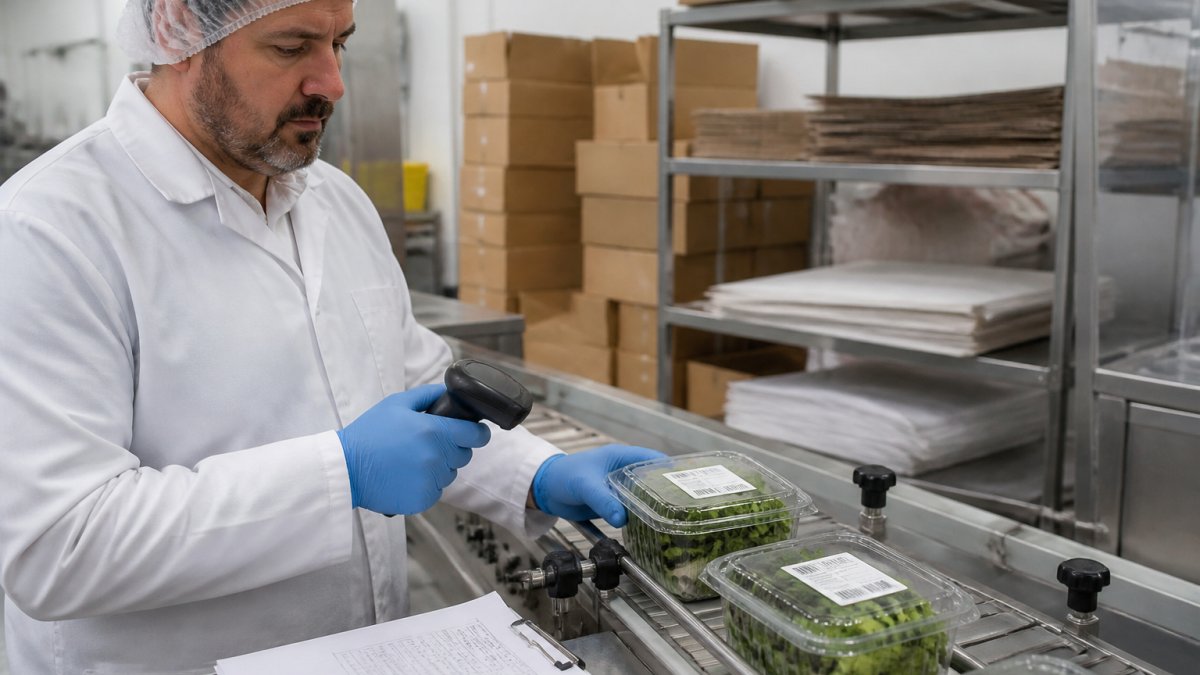
Many businesses find that a simple database works better than spreadsheets once you reach a certain volume.
The key is consistency. If traceability is someone's part-time responsibility, it won't work. It needs to be built into your standard operating procedures. Every receipt, every production run, every shipment goes into the system the same day it happens.
LINK: One Partner. Multiple Capabilities.
Request a Manufacturing Quote →
Food Traceability Best Practices for Batch Tracking and Documentation
Batch tracking is the backbone of traceability. A batch is a defined quantity of product produced under consistent conditions. When something goes wrong, you're pulling batches, not individual units.
Use consistent batch numbering. Many food businesses use a format like YYYYMMDDNNN, where the first eight digits are the production date and the last three are a sequence number.
Document lot numbers from every supplier. When you receive an ingredient, capture the supplier's lot number. This creates traceability backward to the source.
Keep production records contemporaneous. Don't wait until the end of the shift or the end of the week to document what happened. Record information as production occurs.
Maintain separate records for different production lines or shifts if applicable. If you run multiple lines simultaneously, batch records should reflect which line produced which batch.
Store records securely and consult the FDA's official guidance for applicable retention requirements.
Make your records searchable. Whether you're using a database or organized spreadsheets, you need to be able to retrieve information by supplier name, ingredient, batch number, production date, or customer.
Effective batch tracking requires consistent documentation practices at every stage of production and distribution.
| Documentation Stage | What to Capture | Key Detail |
|---|---|---|
| Receiving | Supplier name, product, lot number, quantity, date | Capture supplier lot numbers for backward traceability |
| Production | Batch number, ingredients used, supplier lots, production date and time | Record which supplier lots went into which batches |
| Quality Control | Quality checks performed | Document during production, not after shift ends |
| Distribution | Batch numbers shipped, customer name, quantity, date | Know which batches reached which customers |
Implementing Traceability in Your Production and Packaging Operations
Implementation is where many food businesses stumble. The concept is clear, but execution requires changes to how you work.
Start by mapping your current supply chain. List every supplier. Document every production step. Identify every customer. This map becomes the foundation for your traceability system.
Next, identify what information you need to capture at each stage. At receiving, capture supplier name, product description, lot number, quantity, and date.
Decide on your tools. Many small food businesses start with spreadsheets organized by supplier, production date, and batch number.
Train your team. Everyone involved in receiving, production, or shipping needs to understand why traceability matters and what their role is. If people don't see the importance, they'll cut corners.
Conduct a traceability exercise. Pick a random product batch and trace it backward to suppliers and forward to customers.
Test your system under pressure. Many companies discover that their traceability works fine during normal operations but breaks down when they're under time pressure or dealing with an unexpected situation.
Document your procedures. Write down exactly how traceability is maintained in your operation. This becomes your standard operating procedure. It ensures consistency and helps new employees understand their responsibilities.
Implementing Traceability in Your Production and Packaging Operations
The specific traceability challenges you face depend on your operation. If you're a food manufacturer, you're managing ingredient lots and production batches. If you're a distributor or repacker, you're managing product lots and customer shipments.
For manufacturers, the critical link is connecting raw materials to finished products. Every batch of finished goods must trace back to specific supplier lots. This requires batch records that document exactly which ingredients went into which products.
For distributors and repackers, traceability focuses on product movement. You need to know which supplier lots you received, which customer orders they went into, and which retailers received them.
Production and packaging records can be linked to help trace products from production through to the finished package.
When working with a contract manufacturer or co-packer, businesses can discuss how production and ingredient-lot records will be exchanged.
The most common implementation mistake is treating traceability as a compliance checkbox rather than an operational tool.
Food traceability isn't a luxury for large corporations. Every food business needs it. The FDA requires it. More importantly, your customers and consumers expect it. When you can trace products with confidence, you operate with less risk and more control.
Frequently Asked Questions
What is the role of traceability in the food industry?
Traceability can help food businesses document the movement of ingredients and finished products through production, processing, and distribution. Records can help identify which products and batches may be involved in an issue.
What is the FDA Food Traceability Rule and how does it affect my business?
The FDA Food Traceability Rule establishes requirements for certain high-risk foods to maintain records that enable rapid identification of products and their immediate suppliers and recipients. If your business manufactures, processes, imports, or distributes foods covered under this rule, you must maintain traceability data and be prepared to respond to FDA requests within specific timeframes. The rule applies to foods like leafy greens, berries, melons, and certain seafood, among others. Consult the FDA's official guidance to determine which requirements apply to your operations.
How does food traceability help with product recalls?
Food traceability records can help identify batches, production dates, or supplier lots that may be involved in a safety concern. The records can inform decisions about which products to investigate and what response may be appropriate.
What information should food businesses record for traceability?
Maintain records that document the source of raw materials and ingredients, production dates and batch numbers, processing parameters (temperatures, times, equipment used), packaging dates and lot codes, distribution records showing where products were shipped, and supplier information. Each record should link back to the previous step in the supply chain and forward to the next, creating an unbroken chain of custody. Consult applicable official guidance for record-retention and access requirements. Discuss documentation responsibilities with any contract manufacturer involved in your production.
What are the main benefits of food traceability for brand protection?
Traceability records can help businesses document product movement and review supplier, production, and distribution information when assessing an issue.
How can food manufacturers improve supply chain traceability?
Start by mapping your entire supply chain, identifying all suppliers and distribution partners. Implement a system to track batch numbers, production dates, and lot codes at every stage. Establish clear documentation procedures and ensure all partners understand their role in maintaining records. Choose recordkeeping tools and review procedures that fit your operation. If you work with a contract manufacturer, discuss how its services and documentation processes fit your needs.